
Local SEO for WordPress, Built From the Rank Gap Scan™
Yoast Local SEO and AIOSEO fill in your address fields and your schema, and then your rankings stop moving. A plugin cannot build the location pages, earn the citations, or fix a Google Business Profile that contradicts your site, and those are the things that actually move local rankings.
Every engagement starts with the Rank Gap Scan™, which measures your site against the businesses already holding the map positions you want.
- Rank Gap Scan™ first
- Location pages that are not copies
- Profile and site in agreement

What it is
What Local SEO for WordPress Involves
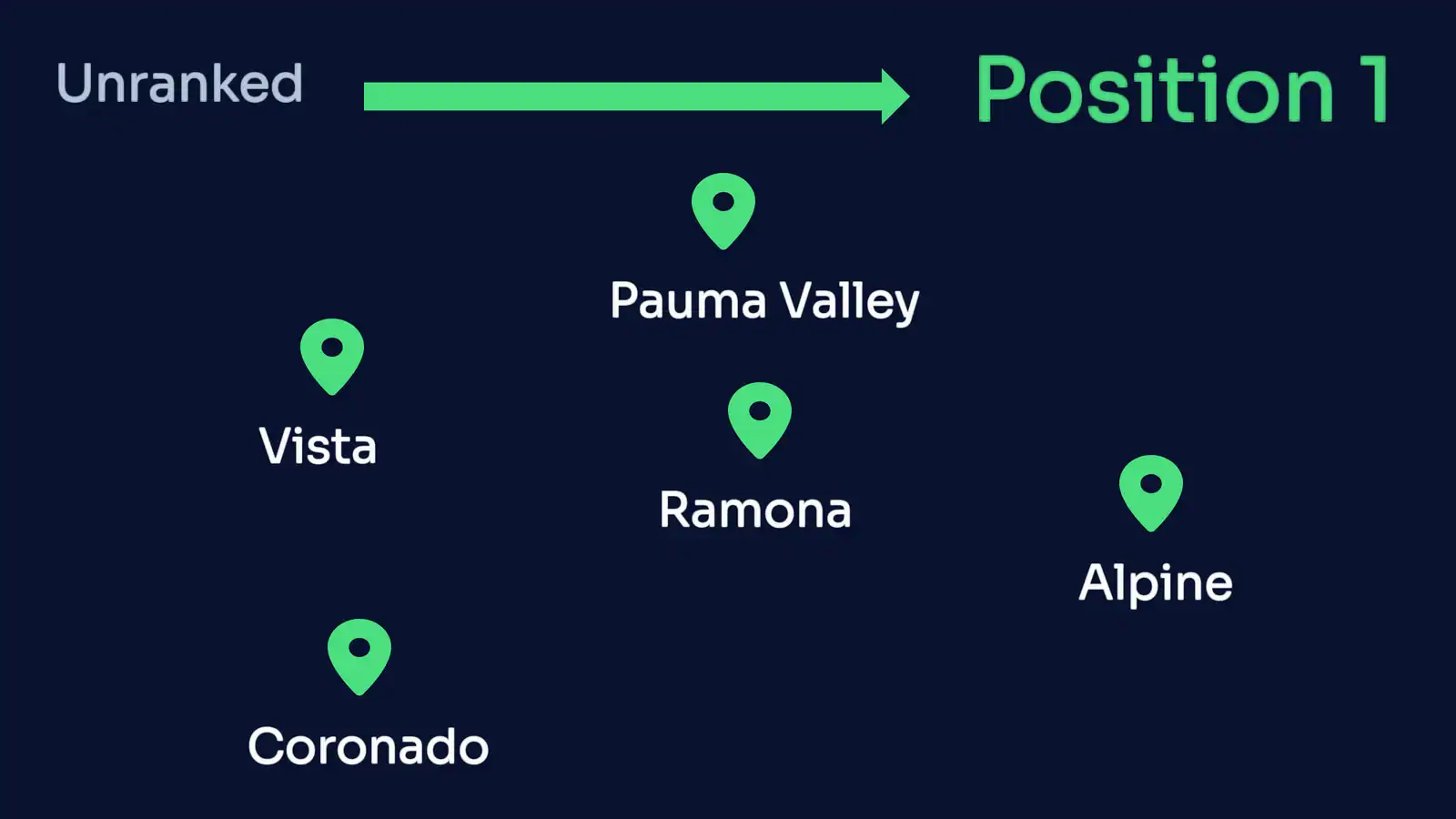
Local SEO for WordPress is the work of making a WordPress site rank in local search results and on Google Maps for searches tied to a place, so nearby customers and local customers find you before a competitor: location pages built for each area served, consistent business information across the web, a Google Business Profile that matches the site, local business schema, and reviews. A plugin supplies the schema fields; the pages, the citations and the profile alignment are built work. One client’s five city pages went from unranked to position 1 for their own city terms.
The plugin ceiling
Where the Plugin Stops
Yoast Local SEO, AIOSEO and SEOPress do a real job well, and so do Rank Math and The SEO Framework with their local extensions. Between them these SEO plugins report millions of active installations, and the key features are much the same: from the WordPress dashboard you enter your business details once and they output correct structured data, opening hours, business hours and a store finder.
- Schema markup. Local business schema for the business type you choose, which you can check in Google’s Rich Results Test, the validation system that matters.
- Maps and locations. Google Maps integration with custom markers, usually set up with an API key, and multi location support, so multiple locations, or multiple business locations under one brand, are managed from one dashboard.
- Location details in the editor. A block in the WordPress editor that prints location information wherever you place it.
The Yoast Local SEO plugin, Yoast SEO Premium, All in One SEO and the other plugins share similar local SEO features and the same strength: no coding required, no PHP code to edit and no technical knowledge required. Install one. Then notice what happens next, which is usually nothing, because schema tells search engines what you claim about yourself and rankings are decided by what everyone else says about you and by whether you have a page worth ranking for each place you serve.
The four things a plugin structurally cannot do: build a page for each area that says something true and specific about that area, earn mentions of your business on other sites, resolve a Google Business Profile whose categories or name contradict your website, and accumulate reviews.
Location pages
Location Pages That Are Not Copies
The failure mode in local SEO is twenty city pages that differ only by the city name. Google reads them for what they are, and a visitor who lands on one recognizes it instantly.
A location page earns its place by carrying evidence that belongs to that place: work actually done there, conditions specific to that area, neighborhoods named because they matter to the service, and results from customers there. That is harder than templating, which is precisely why it works. Title tags and headings name the place; the body proves it; and each page is linked from the site and listed in the XML sitemap.
A bathtub refinishing company in San Diego County
Five city pages built this way, for Alpine, Ramona, Coronado, Vista and Pauma Valley, went from unranked to position 1 for their own city terms. Across the whole site, 47 of 54 tracked keywords rank on page one as of 25 August 2026 and 21 rank in the top three, including bathtub reglazing near me at position 3 against 14,800 monthly searches and tub reglazing at position 2 against 4,400.
Profile and site
The Profile and the Site Have to Agree
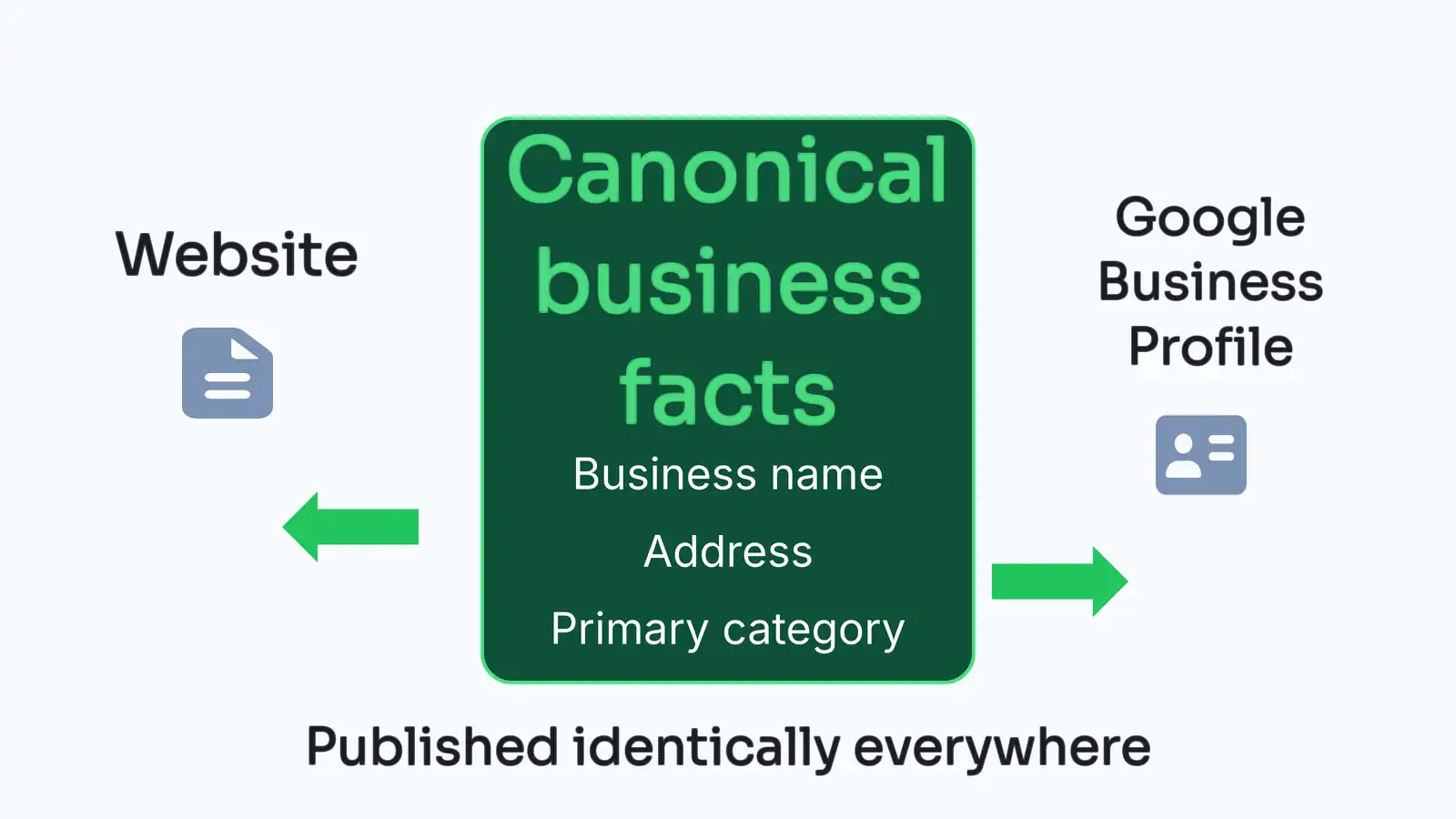
A common and invisible problem: the Google Business Profile, formerly Google My Business, says one business name, the website header says a slightly different one, the footer address uses a suite number the profile omits, the primary category describes a service the site barely mentions, and the service areas listed are not the places the business serves. Each difference is small. Together they tell Google it cannot be confident which entity your site describes, and confidence is what local rankings are made of.
The fix is unglamorous and it works: one canonical set of business data, published identically on the site, in the schema, on the profile and in every citation.
The engine
How the Work Runs
The Rank Gap Scan™ measures your site and profile against the businesses holding the positions you want: which areas they have pages for, where they are cited, what their profiles claim, how many reviews they carry. The Authority Build Map™ turns that into a prioritized sequence, usually profile alignment first because it is fast, then the location pages that matter most, then citations and reviews. Rank Momentum™ carries the ongoing work, because local rankings decay when nothing new happens. Local SEO success is measured in local search visibility per area, the local search traffic it brings and the calls that follow, not in plugin scores; local visibility you cannot count is not a result.
When not to hire us
When This Is Not Your Constraint
If you serve customers anywhere and place is irrelevant to how they choose you, local work is the wrong purchase, because there is no local audience to win. A local presence pays when the right local audience searches by place. If you have no Google Business Profile at all, the first step is creating and verifying one, which takes days and costs nothing, and doing that before hiring anyone is sensible. And if your profile ranks well already and your website does not, the constraint is the site rather than the local layer.
Who does the work
Who Does the Work

Phil Belleville
Founder, WordPress Dynamics
- SEO since 1995
- WordPress since 2003
- 45-day guarantee
Phil Belleville, practicing search engine optimization since 1995 and engineering WordPress sites since 2003, based in Omaha, Nebraska and working with businesses across the United States.
Client reviews
In the owners’ own words
Our phones never stopped ringing once they optimized our site. We now dominate local searches for boat engine repair and maintenance.
We went from relying on word-of-mouth to dominating Google searches. Jobs are coming in from all over the area.
They put us in front of people actively searching for our service. Leads have tripled, and our schedule stays full year-round.
What it costs
What It Costs
Local work runs inside the Rank Momentum™ engagements at published rates: Silver $1,500, Gold $2,500 and Platinum $5,000 and up per month, with no contract after the first six months. The Rank Gap Scan™ comes first and its fee is stated before any work begins.
Questions
Local SEO for WordPress: Questions We Get Asked
Still deciding? The first conversation is free, thirty minutes, and comes with no commitment.
Book a free 30-minute local visibility review →Can I do local SEO myself?
Parts of it, yes, and you should. Claiming and completing your Google Business Profile, keeping your business details identical everywhere, and asking customers for reviews are all things an owner can do without help and they matter more than most paid tactics. What is harder to do alone is building genuinely distinct location pages and earning citations at scale.
Is a local SEO plugin enough?
A plugin outputs correct LocalBusiness schema and saves you writing it by hand, which is genuinely useful. It cannot build location pages, earn citations, fix a profile that contradicts your site, or accumulate reviews, and those decide local rankings.
How much should I pay for local SEO?
Published market rates for local SEO run roughly $500 to $3,000 per month depending on the number of areas served and the competition in them. Our engagements start at $1,500 per month. A single city with light competition sits at the lower end; several cities with established competitors sits higher.
How many location pages do I need?
One for each area where you can say something true and specific, and none for areas where you cannot. A page per postcode across a county produces near-duplicate pages that dilute the site. It is better to have five pages with real local evidence than twenty templated ones.
How long does local SEO take?
Profile alignment can shift map visibility within weeks because it corrects information Google already holds. Location pages and citations accumulate over months. Where a profile is newly created, the first positions often appear quickly, but holding and improving them is the work that follows.
Do reviews affect local rankings?
Yes, in volume, recency and content, and they affect whether someone calls you once they see you, because star ratings show beside your listing. A steady flow of recent reviews outperforms a large number that stopped two years ago. We set up the request sequence rather than obtaining reviews on your behalf.
What if I serve customers at their location rather than mine?
Then your profile should be configured as a service area business and your address hidden, which changes how the profile behaves and which Google search results it appears in, because you are a business that travels rather than a shop customers visit. Getting this setting wrong is a common and quietly expensive mistake.
Does this work for a national business with several offices?
Yes, and the structure differs: each office needs its own profile, its own location page and its own citation set, with the site architecture and internal links keeping them distinct so your own locations do not compete with each other in search.
Which local SEO tools do you use?
A local SEO plugin for the schema, daily rank tracking per area for the map and organic positions, and the Google Business Profile dashboard itself. The best local SEO plugin is the one already installed and correctly configured; switching plugins rarely moves rankings, while the pages, citations and profile alignment do.
How do I get more local customers from Google Maps?
Make the profile and the site agree, give each area you serve a page with evidence that belongs to it, and keep recent reviews coming. Map positions follow confidence in who you are and where you work, and those three things are what build it.
Where should my business info appear on the site?
On the contact page, in the footer of every page and in the structured data, worded identically each time: business name, address or service areas, phone number and business hours. The primary location is the address on your Google Business Profile, and a business with one location should never show a second address anywhere.
Next step
Start With the Rank Gap Scan™
Thirty minutes, free, no commitment. We look at your profile, your site and the businesses currently holding the positions you want, and tell you what stands between you and them.
Book a free 30-minute local visibility review →
- Rank Gap Scan™ first
- Location pages that are not copies
- Profile and site in agreement
CALL 712-635-7879EMAIL hello@wordpressoptimization.com